






While kidney cancer can seem to happen out of nowhere, it sometimes runs in families through shared genetics. For those with a family history, genetic testing for kidney cancer provides clear answers about your personal risk. When an inherited gene variation is present, tumors may develop at a younger age, affect both kidneys, or return over time. Fortunately, renal cancer genetic testing can give you the clarity you need about your genetic risk—empowering you and your doctor to build a proactive screening plan long before symptoms ever appear.
Why Genetic Testing Matters for Kidney Cancer
Up to 5%¹ of kidney cancer cases stem from an inherited gene change, and that rate is likely higher for younger individuals or those with tumors in both kidneys. Because inherited cases often behave differently than non-hereditary ones, medical guidelines now recommend genetic testing for kidney cancer for anyone diagnosed at age 46 or younger, or who has tumors in both kidneys, regardless of family history.²
Understanding your risk through genetic tests for kidney cancer allows you to start more frequent imaging sooner, catching any changes when tumors are smaller and much easier to treat.
The Main Hereditary Kidney Cancer Syndromes
Most hereditary kidney cancers are linked to a few well-studied genetic syndromes. Through renal cancer genetic testing, your care team can pinpoint these specific conditions and design a personalized monitoring plan tailored to your needs.
Von Hippel-Lindau (VHL) Disease
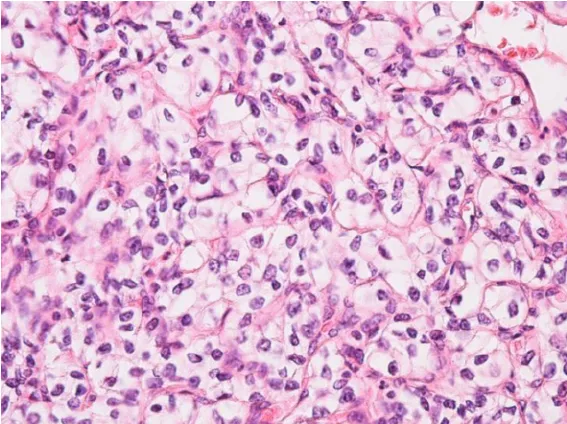
VHL disease is caused by an inherited variation in the VHL gene. It is one of the most well-known causes of hereditary kidney cancer and affects roughly 1 in every 27,000 to 39,000 people.³ About 40–70% of individuals with VHL disease develop kidney cancer during their lifetime, often presenting with multiple tumors in both kidneys.⁴ VHL is most commonly associated with clear-cell type kidney cancer, which is typically slow-growing. Because VHL can also affect the adrenal glands, pancreas, and central nervous system, kidney cancer genetic testing helps your entire care team monitor your health comprehensively.
Birt-Hogg-Dubé (BHD) Syndrome
BHD stems from a change in the FLCN gene. People with BHD often experience non-cancerous skin bumps or lung collapse, alongside a 30–35% lifetime risk of kidney tumors.⁵ Undergoing a genetic test for kidney cancer can help connect these seemingly unrelated symptoms, ensuring you receive the right screening schedule.
Hereditary Leiomyomatosis and Renal Cell Cancer (HLRCC)
HLRCC is linked to a change in the FH gene, which can cause skin and uterine growths (leiomyomas) alongside an estimated 15% risk of kidney cancer.⁶ Because HLRCC-related tumors can behave more aggressively, they can require early, specialized management.⁶
Hereditary Papillary Renal Carcinoma (HPRC)
Driven by changes in the MET gene, HPRC primarily affects the kidneys.⁷ Roughly 90% of individuals with a MET gene change go on to develop kidney growths, cysts, or tumors, typically later in adulthood.⁷
Who Should Consider Hereditary Kidney Cancer Testing?
Several personal and family history factors can point to an inherited risk worth exploring.
Kidney Cancer Diagnosed at a Younger Age
Being diagnosed at age 46 or younger is one of the clearest signs of a potential inherited cause. Medical guidelines recommend kidney cancer genetic testing for this age group, regardless of family history.²
Tumors in Both Kidneys or Multiple Tumors
Developing cancer in both kidneys (bilateral) or having several separate tumors in one kidney suggests a hereditary pattern rather than a one-time, sporadic event.²
A Family History of Kidney Cancer
Having a close relative, such as a parent, sibling, child, or even extended family members, who had kidney cancer, especially early in life, significantly increases the likelihood of a shared genetic variation.⁸
Personal or Family History of Related Conditions:
Features like specific skin growths, unexplained lung collapses, or tumors in the adrenal glands, pancreas, or nervous system can point directly to a hereditary syndrome that a comprehensive panel can confirm.⁶
Key Genes Linked to Hereditary Kidney Cancer
The gene responsible for Von Hippel-Lindau disease. Changes in VHL are associated with a 40–70% lifetime chance of developing kidney cancer, along with tumors in other vital organs.⁴
The gene responsible for Birt-Hogg-Dubé syndrome. Carriers face an estimated 30–35% chance of developing kidney cancer, frequently presenting with multiple or bilateral tumors.⁵
The gene responsible for HLRCC. Carriers face an estimated 15% chance of developing kidney cancer, which tends to be more aggressive and appear at a younger age.⁶
The gene responsible for HPRC. About 90% of carriers develop multiple kidney growths, cysts, or tumors over their lifetime.⁷
Changes in BAP1 raise the risk of kidney cancer alongside eye melanoma, skin melanoma, and mesothelioma (a rare cancer of the tissue lining internal organs). The overall chance of developing any BAP1-related tumor may be as high as 85% with up to a 19% risk of developing kidney cancer.⁹
These genes are linked to hereditary paraganglioma pheochromocytoma syndrome, which raises the risk of adrenal and nerve tumors as well as kidney cancer. For example, individuals with an SDHB change face about a 4.7% chance of developing clear cell kidney cancer, compared to 1.7% in the general population.¹⁰
These genes cause tuberous sclerosis complex, a condition affecting the skin, brain, heart, and lungs. It significantly raises the risk of both benign kidney growths and certain forms of malignant kidney cancer tumors.¹¹
How At-Home Genetic Testing Works

Order and register

Collect your sample

Return your sample

Get your results

Talk to a genetic counselor
Costs and Insurance Coverage
Insurance Billing
Self-Pay Option
While kindey cancer can run in families, understanding your personal risk empowers you to stay ahead of it.
References
- Fol M, et al. Detection rate and spectrum of pathogenic variations in a cohort of 83 patients with suspected hereditary risk of kidney cancer. Genes (Basel). 2023;12(1):12. doi:10.3390/genes12010012
- Utilization of genetic evaluation in patients with kidney cancer who meet guidelines for genetic referral. Urol Oncol. 2025;S1078-1439(25)00238-8. doi:10.1016/j.urolonc.2025.02.001
- National Cancer Institute. Von Hippel-Lindau Disease (PDQ®)–Health Professional Version. Cancer.gov. Accessed August 6, 2026. https://www.cancer.gov/publications/pdq/information-summaries/genetics/vhl-syndrome-hp-pdq
- Von Hippel-Lindau associated renal cell carcinoma: surveillance, surgery, and systemic therapy. AUANews. January 2026. Accessed August 6, 2026. https://auanews.net/issues/articles/2026/january-2026/von-hippel-lindau-associated-renal-cell-carcinoma-surveillance-surgery-and-systemic-therapy
- Genomics Education Programme. Birt-Hogg-Dubé syndrome. NHS England Knowledge Hub. Accessed August 6, 2026. https://www.genomicseducation.hee.nhs.uk/genotes/knowledge-hub/birt-hogg-dube-syndrome/
- Cunha JF, et al. Hereditary leiomyomatosis and renal cell cancer–recognizing patterns may save lives. Eur J Case Rep Intern Med. 2022;9(8):003512. doi:10.12890/2022_003512
- Center for Jewish Genetics. MET – Hereditary Papillary Renal Cancer. Jewishgenetics.org. Published December 2025. Accessed August 6, 2026. https://www.jewishgenetics.org/hered_cancer_genes/met-hereditary-papillary-renal-cancer/
- National Cancer Institute. Genetics of Renal Cell Carcinoma (PDQ®)–Health Professional Version. Cancer.gov. Updated May 2025. Accessed August 6, 2026. https://www.cancer.gov/types/kidney/hp/renal-cell-carcinoma-genetics
- Facing Our Risk of Cancer Empowered (FORCE). Risk management: information for people with an inherited BAP1 mutation. Facingourrisk.org. Published July 2025. Accessed August 6, 2026. https://www.facingourrisk.org/blog/information-for-people-with-an-inherited-bap1-mutation
- Hereditary Paraganglioma-Pheochromocytoma Syndromes. GeneReviews®, NCBI Bookshelf. Updated September 2023. Accessed August 6, 2026. https://www.ncbi.nlm.nih.gov/books/NBK1548/
- Memorial Sloan Kettering Cancer Center. Genetic Kidney Cancer Testing. MSKCC.org. Accessed August 6, 2026. https://www.mskcc.org/cancer-care/risk-assessment-screening/genetic-counseling-and-testing/hereditary-cancer-genes-and-hereditary-cancer-syndromes/hereditary-kidney